When the Partnership Stalls: Diagnosing Cultural Friction in Japanese-American Joint Ventures Before It Costs You Everything
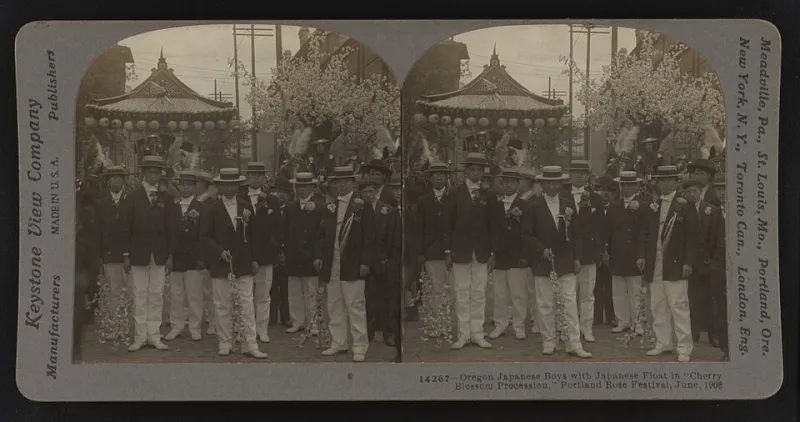
Photo: Keystone View Company, Public domain, via Wikimedia Commons
The contracts are signed. The press release has been issued. Both sides have shaken hands — or bowed — and the joint venture is officially underway. Then, somewhere around month fourteen, the emails get slower. Meetings become tense. Decisions that should take a week stretch into months. By year two, what looked like a promising cross-Pacific alliance is quietly unraveling.
This pattern is not an anomaly. Industry research consistently suggests that roughly 40 percent of Japanese-American joint ventures experience significant operational disruption in their second year — a window when initial goodwill has faded but the partnership has not yet developed the resilience to weather cultural friction. Understanding why this happens, and how to prevent it, is one of the most pressing challenges facing companies that operate across both markets.
The Illusion of Alignment in Year One
The first year of any joint venture tends to be characterized by structured optimism. Both parties invest heavily in relationship-building, defer to each other's preferences, and avoid surfacing disagreements that might jeopardize the new alliance. Japanese business culture, with its emphasis on wa — harmony — can make this deferral feel natural and even virtuous.
The problem is that this early-stage diplomacy can mask fundamental incompatibilities in management philosophy. American executives often interpret silence or measured agreement as consensus. Japanese counterparts, meanwhile, may interpret an American partner's directness or rapid pivoting as a lack of seriousness or respect for the agreed-upon process.
"Year one is essentially a honeymoon period," explains one cross-cultural business consultant who has advised Fortune 500 companies on US-Japan operations. "The real stress test begins when something goes wrong — a missed target, a personnel conflict, a market shift — and both sides have to respond. That's when you find out how different the decision-making architectures actually are."
Decision-Making Timelines: The Most Underestimated Fault Line
Among the most consistently cited sources of friction is the mismatch between American and Japanese decision-making timelines. US business culture prizes agility. Quarterly earnings cycles, investor pressure, and a startup-influenced ethos of "move fast" have conditioned American executives to expect rapid responses and iterative course corrections.
Japanese corporate culture, by contrast, often relies on nemawashi — a consensus-building process in which proposals are circulated among stakeholders before any formal decision is made. This approach prioritizes organizational buy-in over speed, and it produces decisions that, once made, tend to be implemented with remarkable consistency. However, to an American partner watching a market opportunity close, the process can feel like institutional paralysis.
In one documented case involving a mid-sized California technology firm and a Tokyo-based electronics manufacturer, the American team submitted a product modification proposal expecting a two-week turnaround. The Japanese side, following internal nemawashi protocols, required six weeks. By the time approval arrived, the American team had already begun exploring an alternative supplier — a move the Japanese partners perceived as a serious breach of trust.
The resolution required months of relationship repair and the engagement of a dedicated cross-cultural liaison. The cost, in both time and goodwill, was substantial.
Hierarchy, Titles, and the Invisible Chain of Command
Organizational hierarchy presents another persistent challenge. Japanese corporate structures tend to be vertically oriented, with significant weight placed on seniority, title, and formal reporting lines. American companies — particularly those in technology, media, and professional services — often operate with flatter hierarchies where junior employees are encouraged to contribute ideas directly and challenge leadership assumptions.
When these cultures intersect in a joint venture, confusion is almost inevitable. An American manager who sends a proposal directly to a senior Japanese executive, bypassing intermediate layers, may intend efficiency. The Japanese recipient may interpret the same action as a sign of disorganization, disrespect, or both.
Cross-cultural consultants recommend mapping the formal decision hierarchy of each partner organization before joint operations begin — and making that map visible to both sides. Identifying a designated point of contact at each level of the hierarchy, and establishing clear protocols for escalation, can prevent a significant volume of interpersonal friction.
Workplace Expectations and the After-Hours Question
The structure of the workday itself can become a source of tension. Japanese corporate culture has historically placed a high value on extended office hours as a signal of dedication, though this norm is evolving domestically under government-led work reform initiatives. American employees, particularly in states like California and New York where labor protections are robust, tend to maintain firmer boundaries between professional and personal time.
In joint ventures where Japanese executives expect American counterparts to be available for evening calls or weekend communications — standard practice in Tokyo — resentment can build quickly on the American side. Conversely, when American team members sign off at 5:00 PM during a product crisis, Japanese colleagues may question their commitment to the partnership.
Establishing explicit communication norms at the outset — including time zone accommodations, expected response windows, and protocols for urgent matters — is not merely a courtesy. It is a structural safeguard against the kind of low-grade resentment that erodes partnerships over time.
A Framework for Early Detection
Preventing year-two deterioration requires more than cultural sensitivity training during the onboarding phase. Practitioners recommend a quarterly cultural audit during the first three years of any joint venture. This process involves structured interviews with team members on both sides, assessment of decision-making velocity against agreed benchmarks, and a review of communication patterns for signs of avoidance or misinterpretation.
Key indicators of emerging misalignment include: a decline in the frequency of proactive communication from one side, an increase in decisions made unilaterally without consultation, and the emergence of separate informal networks that exclude the partner organization.
Businesses that invest in a dedicated cross-cultural operations role — not merely an interpreter, but a professional trained in organizational behavior across both cultures — report significantly higher rates of partnership stability. This individual serves as an early warning system, translating not just language but intent, expectation, and organizational logic.
Building Partnerships That Last
The 40 percent figure is sobering, but it is not a verdict on the viability of Japanese-American joint ventures. It is a diagnostic. The partnerships that endure tend to share a common characteristic: both sides treat cultural difference not as an obstacle to be minimized but as a variable to be actively managed.
For American executives entering or sustaining a joint venture with a Japanese counterpart, the most valuable investment may not be in legal infrastructure or financial modeling. It may be in understanding how decisions actually get made on the other side of the table — and building the patience, structures, and communication channels to bridge that gap before year two arrives.
Kadouya Directory continues to track developments in US-Japan business partnerships and cross-cultural operational strategy. Businesses seeking resources on cross-Pacific joint venture management are encouraged to explore our Business Strategy listings for consultants and advisory services operating in this space.