When Silence Means Maybe: Decoding Japanese Negotiation Signals That American Executives Consistently Misread
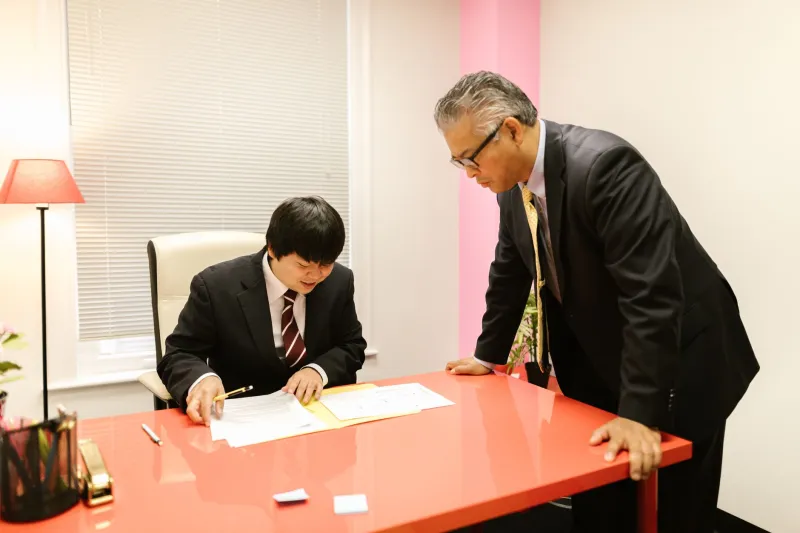
In American boardrooms, a direct "no" is considered professional courtesy. It saves time, respects everyone's schedule, and allows both parties to move on. In Japanese business culture, however, a direct refusal is often viewed as unnecessarily confrontational — a small act of aggression that damages the relational fabric both parties have worked to build. The result is a profound communication gap that costs American companies millions of dollars every year, not through bad deals, but through deals that never happen because one side misread the other entirely.
For any American executive engaging with Japanese business partners — whether in import negotiations, licensing discussions, distribution agreements, or joint ventures — understanding this gap is not optional. It is foundational.
The Architecture of Indirect Communication
Japanese business communication operates within a framework that linguists and cultural scholars refer to as high-context communication. Unlike the low-context, explicit style preferred in American professional settings, high-context communication relies heavily on shared understanding, nonverbal cues, situational awareness, and carefully chosen language that signals meaning without stating it outright.
This is not evasion. It is sophistication.
The Japanese concept of tatemae — the public face or position one presents in formal settings — exists alongside honne, which represents one's genuine feelings or desires. In negotiation, a Japanese counterpart may express tatemae that sounds neutral or even positive while their honne contains serious reservations. Recognizing the distance between the two is the core skill American professionals must develop.
Additionally, the cultural value placed on wa — harmony and group cohesion — means that Japanese negotiators will go to considerable lengths to avoid creating discomfort or conflict, even when they have substantive objections. Preserving the relationship is not a secondary consideration. It is often the primary one.
Case Study: The Distribution Agreement That Evaporated
Consider a scenario that plays out with uncomfortable regularity in US-Japan business dealings. A mid-sized American food and beverage company spent eight months cultivating a relationship with a Japanese distribution partner. Meetings were cordial. Gifts were exchanged. Dinners were warm and extended. When the American team presented final contract terms, the Japanese side responded with phrases such as "This will require further internal consideration" and "There are some points that may present difficulty."
The American executives, interpreting these responses as standard negotiating tactics, pushed forward with a revised offer that reduced the distribution fee by three percent. The Japanese side went quiet. After two weeks of minimal communication, the American team assumed the deal was progressing through internal approval. After six weeks, they sent a follow-up. The response was polite, brief, and essentially final: the Japanese company had decided to pursue other opportunities.
What had actually happened? The phrase "there are some points that may present difficulty" was not a negotiating position. It was a clear signal — by Japanese communicative standards — that a fundamental structural issue existed with the proposed agreement. The American team had heard a negotiating tactic. The Japanese team had delivered a near-explicit warning. The gap between those two interpretations cost the American company an eight-month investment and a market entry opportunity.
A Practical Decoder for American Professionals
The following phrases and behaviors appear regularly in Japanese business negotiations. Understanding their likely meaning within context can dramatically improve outcomes for American deal-makers.
"That would be difficult" (muzukashii desu): This is perhaps the most critical phrase in the entire lexicon of Japanese indirect refusal. In American English, "difficult" implies a challenge that can be overcome with effort or creativity. In Japanese business communication, "that would be difficult" almost always means "no." It is one of the clearest declinations available within the constraints of polite discourse. Treat it accordingly.
Extended silence or pausing during discussion: American professionals are trained to fill silence, often interpreting it as confusion or hesitation that requires clarification. In Japanese negotiation, silence frequently represents active, respectful deliberation. Interrupting or rushing to fill that space can signal impatience and undermine trust. Allow silence to exist.
"We will need to consult internally" following a specific proposal: When this phrase appears in direct response to a particular term or clause — rather than as a general procedural comment — it often indicates that the term in question has created a genuine concern that the speaker is not yet comfortable addressing directly. Note exactly what was on the table when the phrase was used.
Enthusiasm about peripheral topics, deflection on core terms: If your Japanese counterpart becomes animated and detailed when discussing logistics, timelines, or ancillary services, but grows vague or redirects conversation when pricing or exclusivity comes up, pay close attention. Positive energy around secondary matters combined with avoidance of primary terms is a reliable signal that the core terms need revisiting.
A third-party intermediary making contact: In some cases, a Japanese business partner will engage a mutual contact or intermediary to communicate a concern they cannot raise directly. This is not gossip or back-channel maneuvering. It is a culturally sanctioned method of delivering sensitive information while preserving face for both parties. Receive such communications with the seriousness they deserve.
Building a Negotiation Style That Works Across Both Cultures
Adapting to Japanese communication norms does not require American professionals to abandon directness entirely. It requires adding a layer of interpretive awareness and adjusting the pace and texture of deal-making accordingly.
First, invest in the relationship before the negotiation. Japanese business culture places enormous weight on trust built over time. Arriving at a negotiating table with no relational history and expecting rapid deal closure is a structural mismatch. Initial meetings should be devoted to understanding, not closing.
Second, ask open-ended questions rather than yes/no questions. "What aspects of this proposal feel most aligned with your company's priorities?" will yield far more actionable information than "Does this proposal work for you?" The latter invites a polite affirmation that may carry no real meaning.
Third, build in deliberation time explicitly. Rather than treating pauses or requests for internal consultation as obstacles, frame them as part of the process. Sending a written summary of discussed terms after each meeting — a practice that many Japanese business professionals appreciate — gives the other side an opportunity to raise concerns in writing, a medium that can feel less confrontational than verbal objection.
Fourth, consider engaging a cultural liaison or interpreter who is bilingual not just linguistically, but culturally. The difference between a literal translation and a contextual one can be the difference between a closed deal and a misunderstanding that ends a partnership.
The Strategic Value of Reading the Room Correctly
For American companies operating in or expanding into Japanese markets — or welcoming Japanese partners into US operations — the ability to accurately interpret indirect communication is a genuine competitive advantage. Those who develop this skill close deals that their competitors abandon prematurely. They also avoid committing resources to partnerships where the fundamental alignment was never there, but where no one said so directly.
The hidden cost of misreading "no" is not just a lost contract. It is the accumulated weight of relationship capital spent, legal fees incurred, travel budgets exhausted, and strategic timelines delayed — all because two parties were speaking different communicative languages while assuming they were speaking the same one.
At Kadouya Directory, we recognize that successful US-Japan business relationships are built on more than product quality and favorable terms. They are built on the capacity to truly understand what your counterpart is communicating — and what they are deliberately, respectfully, choosing not to say.