Clustered by Design: How Japanese Business Enclaves Are Quietly Rewiring American Regional Economies

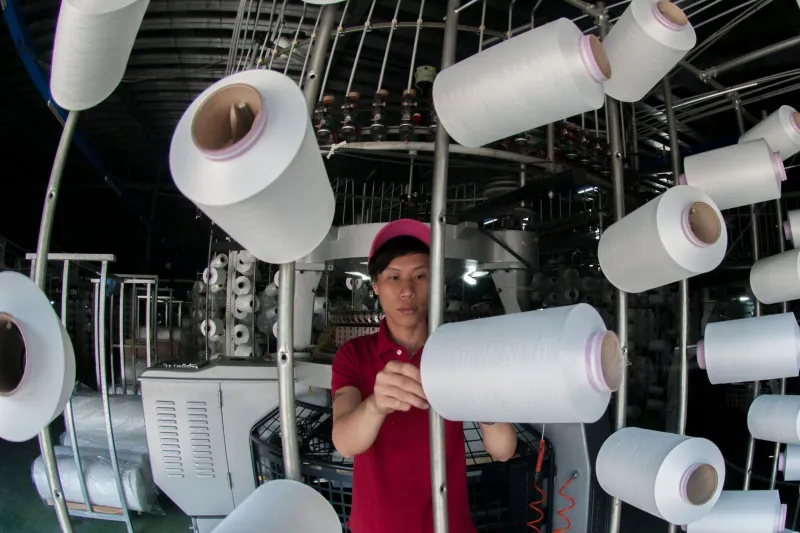
Drive through Marysville, Ohio on a Tuesday morning and the scene resembles any other mid-sized American manufacturing corridor: wide industrial roads, loading docks, shift workers in reflective vests. Look more carefully, however, and a different story emerges. The supplier facilities lining the roads near Honda of America's flagship plant are not random tenants. They are part of a deliberately constructed ecosystem—one in which proximity, trust, and shared operational philosophy matter as much as lease rates or highway access.
This is the Japanese cluster model in practice, and it is reshaping American metro economies in ways that economic developers are only beginning to fully appreciate.
What Makes a Japanese Business Cluster Different
American business parks are largely transactional spaces. Companies select locations based on cost per square foot, access to labor markets, and proximity to customers. Relationships between neighboring tenants are incidental rather than structural.
Japanese business clusters operate on a different logic entirely. When a major Japanese anchor firm—an automaker, a semiconductor manufacturer, a precision equipment producer—establishes a regional headquarters in the United States, it rarely arrives alone. Within a few years, a constellation of Tier 1 and Tier 2 suppliers follows, often encouraged by the anchor company itself. These suppliers bring their own subcontractors, logistics partners, and technical service providers. The result is a layered supply chain geography that mirrors, in compressed form, the keiretsu relationships that have long defined Japanese industrial organization.
"The word we use internally is ikigai—a reason for being," said one senior operations director at a Japanese automotive supplier with facilities in Georgetown, Kentucky, speaking on background. "Every company in our cluster exists in relationship to the others. We are not just neighbors. We are interdependent."
The Midwest Automotive Corridor: A Case Study in Intentional Geography
No region illustrates the cluster dynamic more vividly than the stretch of the American Midwest and Upper South that hosts the bulk of Japanese automotive investment. Honda's Marysville complex, Toyota's Georgetown plant, Subaru's Lafayette, Indiana facility, and Mazda Toyota Manufacturing's Huntsville, Alabama operation collectively anchor dozens of supplier clusters that have transformed the economic profiles of their host communities.
In Georgetown, Scott County's per-capita income has risen steadily since Toyota's arrival in the late 1980s. More significantly, the county now hosts more than 30 Japanese-affiliated supplier operations, many of which conduct continuous improvement activities—kaizen workshops, quality audits, joint engineering sessions—across company lines. This cross-pollination of operational knowledge is unusual in American manufacturing contexts, where intellectual property concerns typically limit inter-firm collaboration.
Economic developers in the region have noticed. "What distinguishes the Japanese cluster from a typical industrial park is the density of informal coordination," noted one regional development official in central Kentucky. "These companies share workforce training resources, they coordinate on infrastructure needs, and they bring a long-term planning horizon that most American firms simply don't apply to facility decisions."
California's Technology Clusters: A Different Expression of the Same Pattern
The cluster phenomenon is not confined to heavy manufacturing. In California's Bay Area and Los Angeles Basin, Japanese technology companies—ranging from robotics firms and semiconductor equipment manufacturers to gaming studios and digital media companies—have established a quieter but equally coherent presence.
San Jose hosts North American headquarters for several major Japanese electronics and semiconductor firms, and the informal networks among them are substantial. Japanese business associations, bilateral chambers of commerce, and industry-specific working groups provide the institutional scaffolding that holds these clusters together outside of formal supply chain relationships.
For Japanese tech startups entering the US market—a subject Kadouya Directory has examined in prior coverage of the Silicon Valley entry challenge—proximity to established Japanese corporate operations in the Bay Area offers a crucial soft-landing advantage. Shared legal counsel, introductions to local government contacts, and access to bilingual talent pipelines are all more accessible when a cluster infrastructure already exists.
What American Cities Are Learning—and What They Are Still Missing
Cities actively courting Japanese investment have become more sophisticated in their understanding of cluster dynamics. Economic development agencies in Alabama, Tennessee, and Indiana now routinely package industrial site proposals with supplier park designations—dedicated zones designed to accommodate the Tier 1 and Tier 2 operations that an anchor Japanese firm will require.
Yet many American municipalities still underestimate the community integration dimension of successful Japanese clusters. Japanese firms that establish long-term regional presences typically invest in local schools, fund Japanese-language programs, support cultural exchange initiatives, and build relationships with local universities for applied research partnerships. These investments are not purely philanthropic; they are strategic mechanisms for deepening community ties and securing the stable, committed workforce that Japanese operational models demand.
Where American cities fall short is in recognizing that Japanese cluster development requires a different kind of civic partnership than traditional economic recruitment. "We spent years focused on the tax incentive package," acknowledged one Midwestern economic development director who requested anonymity. "What we eventually understood is that Japanese companies are evaluating whether a community will be a genuine long-term partner—in workforce development, in infrastructure, in civic welcome. The incentive package is almost secondary."
The Infrastructure of Trust
Perhaps the most difficult aspect of Japanese cluster development for American observers to fully grasp is its reliance on relational infrastructure—the web of obligations, loyalties, and reciprocal commitments that govern business conduct among cluster members.
American business culture tends to formalize relationships through contracts, service-level agreements, and legal frameworks. Japanese cluster relationships are not contract-light, but they layer formal agreements over a foundation of accumulated trust that takes years to build and is carefully maintained through consistent conduct. A supplier that fails to meet quality standards does not simply lose a contract; it risks exclusion from a relational network that sustains its entire business model.
For American firms seeking to integrate themselves into Japanese cluster supply chains—as many have successfully done—understanding this relational architecture is essential. Companies that approach Japanese cluster partners purely as transactional customers tend to find the relationship frustrating and opaque. Those that invest in the long-term relationship-building process that Japanese business culture expects frequently find themselves with supply chain partnerships of unusual stability and depth.
What the Cluster Model Offers American Economic Development
As American policymakers debate industrial strategy and supply chain resilience, the Japanese cluster model offers a compelling reference point. The concentration of interdependent firms around a shared operational philosophy produces economic density—more jobs, more local procurement, more technical knowledge accumulation—than dispersed industrial development typically achieves.
For American metro areas competing for the next generation of manufacturing and technology investment, the lesson from communities like Georgetown, Marysville, and Lafayette is not simply that Japanese firms are desirable tenants. It is that the organizational logic Japanese companies bring with them—the emphasis on long-term commitment, supplier integration, operational discipline, and community embeddedness—creates a fundamentally different kind of economic asset.
The clusters that Japanese firms have quietly assembled across American metro areas are not accidents of geography. They are the product of deliberate organizational design, applied at a regional scale. American cities that learn to recognize and support that design will be better positioned to capture its full economic benefit.