Waste Nothing, Gain Everything: How the Japanese Mottainai Mindset Is Cutting Costs at American Facilities
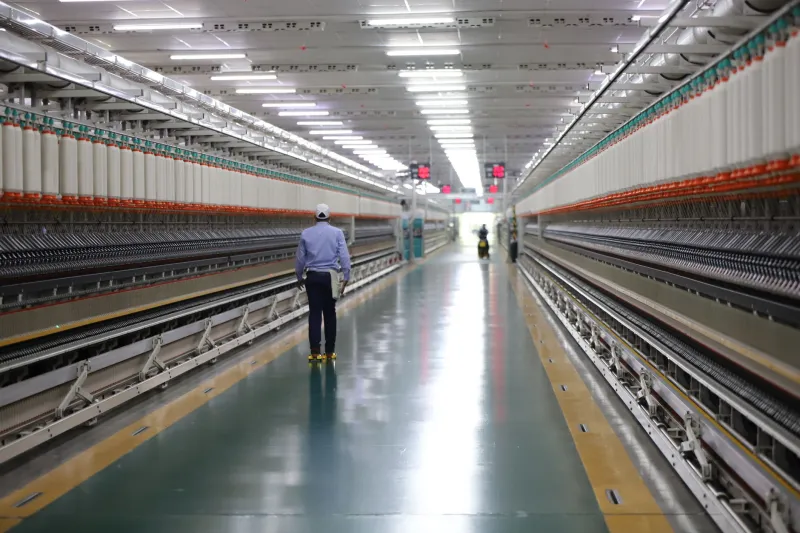
In American business culture, waste is often treated as an acceptable cost of doing business — a rounding error buried somewhere between overhead and operational variance. In Japanese business culture, waste is something closer to a moral failure. That distinction, subtle as it may sound in a boardroom conversation, produces dramatically different outcomes when measured across a fiscal year.
The Japanese word mottainai (もったいない) has no precise English equivalent, which is itself revealing. Loosely translated, it expresses a sense of regret or grief over something valuable being squandered. It applies equally to a half-eaten meal, an idle machine, an over-ordered shipment sitting in a climate-controlled warehouse, or a skilled employee performing tasks below their capability. Waste, in the mottainai framework, is not categorized by type — it is simply recognized as a failure to honor the full potential of a resource.
When that philosophy enters an American operational environment, the results are frequently striking.
From Philosophy to Practice: What Mottainai Looks Like on the Floor
Japanese manufacturers operating facilities in the United States — particularly in the automotive, electronics, and food processing sectors — have long embedded mottainai principles into their standard operating procedures, often without explicitly labeling them as such. The concept overlaps significantly with the muda (waste) pillar of the Toyota Production System, but mottainai extends beyond formal lean methodology into the daily decision-making habits of individual workers.
At a Japanese-managed automotive components plant in Kentucky, for example, floor supervisors conduct what are internally called genchi genbutsu (go and see) walkthroughs specifically focused on identifying material inefficiencies invisible to standard reporting dashboards. Workers are trained not only to flag defective output, but to question whether raw material quantities ordered last quarter still reflect current production realities. The result is a procurement cycle that adjusts dynamically rather than defaulting to historical purchase orders.
This kind of granular, ground-level accountability for resource use is difficult to mandate through policy alone. It tends to emerge organically in organizations where the cultural expectation — not just the management directive — is that every employee shares responsibility for eliminating unnecessary expenditure.
The Numbers Behind the Mindset
The competitive gap created by this approach is not theoretical. Industry analysts and operations consultants who work across both Japanese-managed and domestically managed facilities in the United States have documented consistent patterns.
Japanese-managed manufacturing sites in sectors ranging from automotive supply chains to food production have reported inventory carrying costs running 25 to 40 percent below industry averages for comparable facilities. Scrap and rework rates at several Japanese-owned electronics assembly operations in California and Texas have been documented at roughly one-third the sector norm. In food processing — an industry where material waste directly impacts both margin and regulatory compliance — Japanese-managed plants have demonstrated spoilage rates that, in some documented cases, run below 2 percent against an industry average hovering near 6 to 8 percent.
These figures do not emerge from superior technology alone. The equipment used in many of these facilities is comparable to that used by American competitors. The differentiating variable is behavioral: how workers and managers relate to the concept of unused or misused resources at every level of the operation.
Where American Companies Leak Money Without Realizing It
To understand why the gap exists, it helps to look at where American-managed facilities most commonly absorb waste-related costs without recognizing them as such.
Overproduction is among the most expensive and least visible forms of waste in American operations. The instinct to build buffer inventory — to over-order components, to run production beyond confirmed demand — is deeply embedded in American supply chain culture as a hedge against uncertainty. In the short term, it feels like prudent risk management. Over a fiscal year, it manifests as excess carrying costs, material degradation, and eventual write-downs that quietly erode margin.
Another significant leak involves employee time. The mottainai philosophy extends to human capital: an employee waiting for a process to complete, a manager attending a meeting that produces no actionable outcome, a skilled technician filling out redundant paperwork — all represent forms of waste that mottainai-trained organizations are conditioned to identify and eliminate. American operations frequently absorb these inefficiencies as cultural overhead, rarely subjecting them to the same scrutiny applied to material costs.
Energy consumption represents a third category. Japanese-managed facilities in the United States routinely install consumption monitoring systems at the machine level and set internal targets that go beyond regulatory compliance. Shutdown protocols for idle equipment, lighting management in warehouse zones, and HVAC optimization based on real-time occupancy data are standard practice in many Japanese-managed sites — and genuinely optional considerations in many American-managed equivalents.
What American Leaders Can Borrow Without Rebuilding From Scratch
The encouraging reality for American business leaders is that adopting mottainai-influenced practices does not require a wholesale cultural transformation. Several concrete operational changes can produce meaningful results without demanding that employees internalize a Japanese philosophical framework.
Reframe waste visibility. American operations tend to report waste metrics in aggregate and retrospectively. Japanese-managed facilities make waste visible in real time, at the point of occurrence, to the people closest to the source. Installing simple visual management systems — boards, dashboards, or even handwritten logs — that surface waste data at the department level rather than only in executive reporting can shift accountability meaningfully.
Establish a waste-review cadence. Rather than treating inventory reviews and material audits as quarterly or annual exercises, Japanese-managed operations frequently conduct them weekly or even daily for high-velocity materials. This cadence catches drift before it becomes a write-down.
Extend the concept of waste to time and talent. American efficiency initiatives tend to focus on material and energy costs. Applying similar scrutiny to meeting structures, approval workflows, and skill utilization opens significant additional savings that most organizations leave on the table.
Reward identification, not just elimination. Mottainai cultures create environments where surfacing a waste problem is treated as a contribution, not a complaint. American organizations that explicitly recognize employees for identifying inefficiencies — rather than only rewarding those who fix them — tend to build faster feedback loops.
A Competitive Lens Worth Adopting
For Japanese companies operating in the United States, mottainai is not a management program that gets launched and reviewed. It is a persistent orientation toward resources that shapes thousands of small decisions every day. That orientation, accumulated across an organization and sustained over years, produces cost structures that are genuinely difficult for competitors to replicate through initiative-based approaches alone.
For American companies watching Japanese-managed competitors consistently outperform them on operational efficiency, the lesson is not that culture is destiny. It is that the relationship an organization cultivates with the concept of waste — whether it is treated as an operational nuisance or a strategic priority — ultimately shows up in the numbers.
Mottainai, in that sense, is less a Japanese concept than a universal competitive principle. The companies that internalize it, regardless of their national origin, tend to spend less and keep more. That outcome, translated into any language, is worth pursuing.